
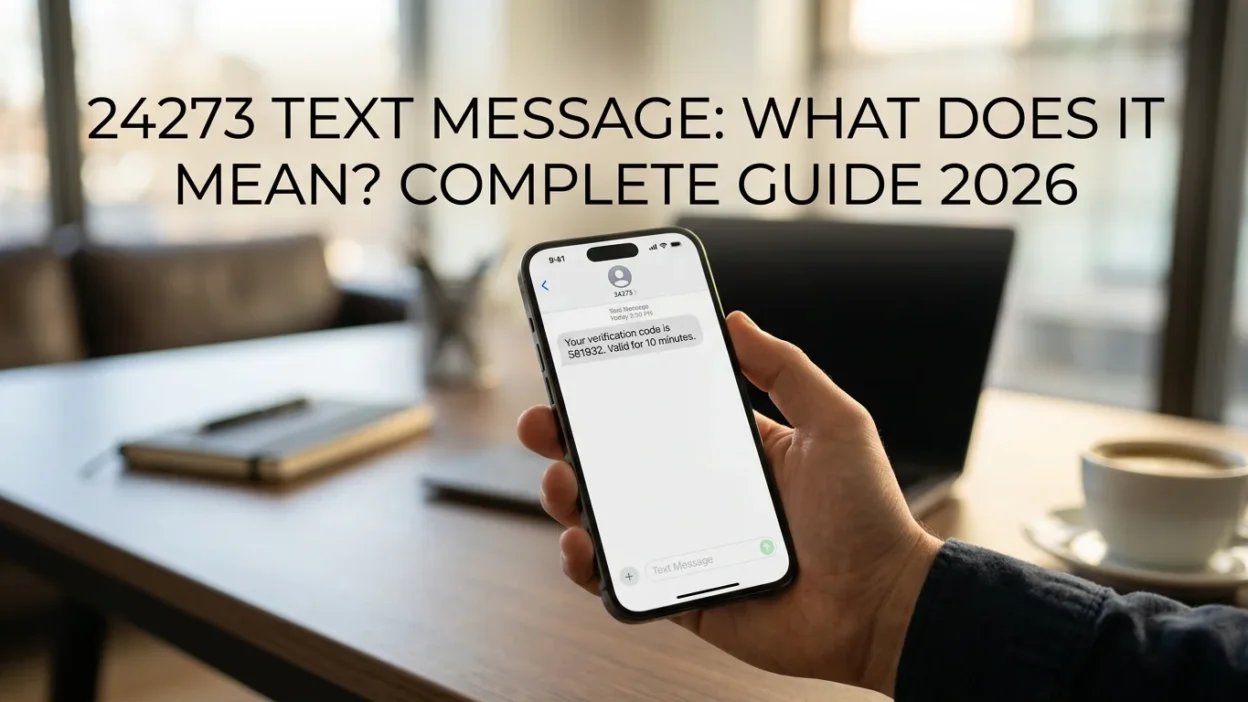
📱 A 24273 text message landing in your inbox can be confusing. It’s not a standard ten-digit number, and it doesn’t look like a typical contact. You might wonder if it’s spam, a scam, or something important you shouldn’t ignore. The truth is that 24273 is a registered short code with a specific purpose. However, because scammers often spoof legitimate numbers, you need to know how to tell the difference.
This guide explains what 24273 is, why you might receive messages from it, and exactly how to respond whether the message is genuine or fraudulent.
📌 What Is the 24273 Short Code?
24273 is a five-digit SMS short code registered in the United States. Short codes are abbreviated phone numbers that businesses use to send text messages to many people at once. They’re easier to remember than full phone numbers and are designed for automated, high-volume messaging.
The number 24273 spells out “CHASE” on a phone keypad, which is a deliberate choice. This mnemonic makes it easier for customers to recognize and remember the code. According to multiple sources, Chase Bank owns and operates this short code for official communications.
Who Uses 24273?
Chase Bank is the primary user of the 24273 short code. The bank sends various types of text messages from this number, all related to account security and management.
The specific uses include:
- Two-factor authentication (2FA) codes when you log into your Chase account online
- Fraud alerts if the bank detects suspicious activity on your card
- Account notifications about important changes or actions needed
- Text banking services that let you check balances and recent transactions
In short, if you’re a Chase customer and you’ve signed up for text alerts, messages from 24273 are likely legitimate.
🔍 What Does a Message from 24273 Look Like?
Genuine messages from 24273 follow recognizable patterns. Understanding these patterns helps you spot fakes.
Verification Code Messages
A typical 2FA message from Chase looks something like this:
“Chase: Your verification code is 123456. Don’t share this code with anyone. We’ll never call or text to ask for it.”
The message includes the Chase name, a clear purpose, and a security warning.
Fraud Alert Messages
Fraud alerts often say:
“Chase Fraud Alert: Did you attempt a transaction of $XX at [merchant]? Reply YES or NO.”
These messages ask for a simple confirmation and don’t request sensitive information.
Text Banking Commands
Chase’s text banking service allows customers to send commands to 24273. For example, you can text “BAL” to check your balance or “STOP” to cancel text banking services.
⚠️ The Critical Problem: Scammers Spoof 24273
Here’s where things get complicated. The number 24273 is legitimate, but scammers know this. Consequently, they use a technique called “spoofing” to make their messages appear as if they come from 24273.
Spoofing means the scammer manipulates the caller ID or sender information to display a different number. When they spoof 24273, their fraudulent message appears in the same thread as legitimate Chase messages. This makes the scam much harder to detect.
How the Scam Works
The typical 24273 scam follows a predictable pattern:
- You receive a text that appears to be from Chase, warning about a fraudulent transaction or asking you to verify your identity.
- The message includes a phone number to call, often a toll-free number like 1-800-355-5265.
- When you call, an automated system or a fake representative asks for sensitive information like your full debit card number, Social Security number, or online banking password.
- The scammer uses this information to access your account or steal your identity.
Sometimes the scam works differently. The message might ask you to reply with “YES” or click a link. Either way, the goal is to get your personal information.
Why This Scam Is So Effective
The scam succeeds because it exploits trust. Chase customers know that 24273 is a legitimate number. When a message appears from that code, they naturally assume it’s real. Additionally, the scammers often have some real information about you, such as your name or a partial account number. This makes their message seem even more convincing.
✅ How to Tell If a 24273 Message Is Genuine
The key question to ask yourself is simple: Did I initiate this interaction?
Safe Scenarios
- You are actively logging into your Chase account and requested a verification code.
- You recently signed up for text banking and are using the service as intended.
- You previously enabled fraud alerts and the message is asking you to confirm a transaction you actually made.
In these cases, the message is likely legitimate.
Dangerous Scenarios
- The message arrives unexpectedly and creates a sense of urgency.
- The message asks you to call a phone number you don’t recognize.
- The message asks you to click a link to “verify” your account.
- The message asks for your full card number, Social Security number, or password.
- The message says there’s a problem and you need to act immediately.
Chase will never ask for your full card number, Social Security number, or online banking password via text. The bank will never call you and ask for a verification code you received. These are universal red flags.
🛡️ What to Do If You Receive a Suspicious 24273 Message
If you suspect a message from 24273 is a scam, take these steps immediately.
Don’t Click, Don’t Call, Don’t Reply
Do not click any links in the message. Do not call any phone numbers provided. Do not reply to the text, even to say “STOP.” Interacting with the message confirms to scammers that your number is active.
Verify Through Official Channels
The safest way to verify any Chase communication is to call the number on the back of your debit or credit card. This number is printed by Chase and cannot be spoofed. A customer service representative can confirm whether the message was legitimate.
You can also log into your Chase account directly through the official Chase mobile app or website. Check your account activity for any unauthorized transactions. If there’s a problem, you’ll see it there.
Report the Scam
Forward the suspicious text to 7726 (SPAM). This is the universal short code for reporting spam texts in the United States. Your carrier will use the report to investigate and potentially block the sender.
You can also report the fraud to Chase directly. Call the number on the back of your card and explain what happened. The bank can add extra security measures to your account.
Secure Your Account
If you provided any information to the scammer, act quickly. Change your online banking password immediately. Contact Chase to report the potential fraud and request a new card if necessary. Monitor your account closely for any unauthorized activity.
❌ Common Mistakes to Avoid
Many people make predictable errors when dealing with 24273 messages. Avoiding these mistakes can protect you.
Mistake 1: Trusting the Number Blindly
Just because a message comes from 24273 doesn’t mean it’s safe. Scammers can spoof this number. Always verify the message through official channels before acting.
Mistake 2: Calling the Number in the Text
Never call a phone number provided in a text message, even if the message appears to be from a trusted source. Scammers set up fake call centers to harvest your information. Call the number on the back of your card instead.
Mistake 3: Replying to Stop the Messages
Replying “STOP” to a scam message doesn’t work. It only confirms your number is active, which may lead to more spam. Use the 7726 reporting method instead.
Mistake 4: Sharing Verification Codes
If you receive a legitimate 2FA code from 24273 and someone calls asking for it, hang up. Chase will never call and ask for your verification code. The code is for your use only.
💡 Expert Tips for Chase Customers
If you bank with Chase, these practices will keep your account secure.
Enable Fraud Alerts
Chase offers fraud alert services that notify you of suspicious activity. These alerts come from 24273. Enabling them helps you catch fraud early.
Use the Chase Mobile App
The official Chase app is the safest way to manage your account. You can check balances, transfer funds, and verify transactions without relying on text messages.
Never Share Your Login Credentials
Chase will never ask for your online banking username or password via text or phone. If someone requests this information, it’s a scam.
Keep Your Contact Information Updated
Ensure Chase has your current phone number and email address. This ensures you receive legitimate alerts and can be contacted if there’s a problem.
❓ Frequently Asked Questions
Is 24273 a legitimate Chase number?
Yes, 24273 is a registered short code owned by Chase Bank. Chase uses it for verification codes, fraud alerts, and text banking services.
Why did I get a text from 24273?
You received a text from 24273 because Chase sent it. This could be a verification code you requested, a fraud alert, or a text banking response. However, scammers can spoof the number, so verify through official channels if the message seems suspicious.
Can I stop receiving texts from 24273?
If you want to stop receiving text banking messages, you can text “STOP” to 24273. However, you cannot opt out of security alerts like fraud warnings if you want to keep your account protected.
What should I do if I get a 24273 text I didn’t request?
Do not click any links or call any numbers in the message. Call the number on the back of your Chase card to verify whether the message is legitimate. If it’s a scam, report it to 7726 (SPAM).
Is 242733 also a Chase number?
There is conflicting information about 242733. Some sources list it as a Chase number, while others claim it’s a phishing attempt. To be safe, trust only 24273 for Chase communications and verify anything from 242733 directly with the bank.
What does a Chase fraud alert from 24273 look like?
A legitimate Chase fraud alert asks you to confirm whether you made a specific transaction. It includes the amount and merchant, and asks you to reply YES or NO. It will not ask for your full card number or password.
Can scammers really spoof 24273?
Yes, scammers can spoof any number, including short codes like 24273. Spoofing makes the message appear to come from Chase when it actually comes from a fraudster.
✅ Conclusion
The 24273 text message originates from a legitimate Chase Bank short code. Chase uses it for verification codes, fraud alerts, and text banking services. However, scammers frequently spoof this number to trick customers into revealing sensitive information. The golden rule is simple: verify through official channels. Call the number on the back of your card or log into your Chase account directly. Never click links, call numbers, or share information based solely on a text message. By staying vigilant, you can benefit from Chase’s convenient text services while protecting yourself from fraud.

Mr. Abdullah is a passionate writer who creates engaging, helpful, and easy-to-understand content for readers. He enjoys sharing fresh ideas, useful insights, and inspiring stories through MessageWritingHub.