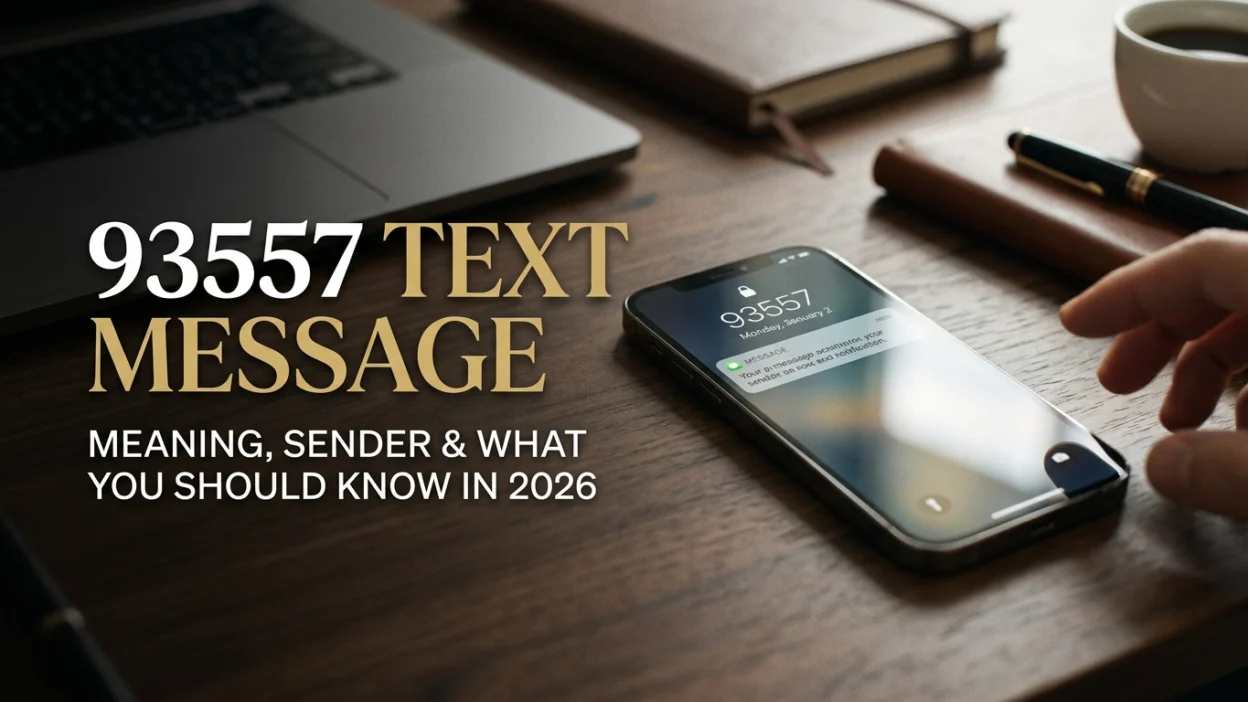
📱 Receiving a text message from a five-digit number like 93557 can be confusing. Is it a legitimate bank alert, or is someone trying to steal your information? The answer depends entirely on the context of the message and who is actually sending it. Understanding what the 93557 text message represents is crucial for protecting your financial accounts and personal data.
This guide will explain the legitimate uses of the 93557 short code, show you how scammers exploit it and provide clear steps for verifying any message you receive. By the end, you’ll know exactly how to handle a 93557 text message with confidence.
📌 What Is the 93557 Short Code?
A short code is a five- or six-digit number that businesses use to send high-volume text messages to their customers. Unlike a standard ten-digit phone number, a short code like 93557 functions as an automated messaging gateway. The 93557 short code is officially registered to Wells Fargo, one of the largest banks in the United States.
Wells Fargo uses this code to send legitimate account alerts, verification codes, and text banking responses to its customers. Because the number is short and easy to remember, it’s designed for quick communication between the bank and account holders. Furthermore, short codes are regulated and registered, which means they cannot be randomly generated by scammers. The 93557 number belongs to Wells Fargo and is part of their official customer communication system.
Why Banks Use Short Codes
Financial institutions prefer short codes for several practical reasons. First, they allow banks to send thousands of messages simultaneously without clogging individual phone lines. Second, short codes are easier for customers to remember and recognize. Third, they provide a layer of security because the number is registered and verified. Consequently, when you see a message from 93557, you can usually trust that it originated from Wells Fargo’s official system.
🏦 Legitimate Uses of the 93557 Text Message
When you receive a message from 93557, it is usually a genuine communication from Wells Fargo. The bank uses this short code for several specific purposes, and understanding these uses helps you distinguish legitimate messages from potential scams.
Text Banking Commands
Wells Fargo offers a text banking service that lets customers check their account information without logging into the app. You can send specific commands to 93557 to receive information. For example, texting “LIST” to 93557 returns a list of all your accounts eligible for text banking. Similarly, texting “TIPS” provides helpful information about using the text banking service.
The text banking feature is particularly useful for customers who want quick access to their balance without opening an app. It’s also helpful for those who don’t have smartphones or prefer simple text-based communication. Additionally, text banking works even when you have limited internet connectivity, making it a reliable backup option.
Downloading the Mobile App
One common use of the 93557 short code is to help customers download the Wells Fargo mobile app. You can text “IPH” for iPhone or “AND” for Android to 93557, and the bank will send you a one-time link to download the app. This feature simplifies the process for customers who want to switch to mobile banking but aren’t sure where to start.
The link provided is temporary and designed for one-time use. Once you download the app, the link expires, adding a layer of security to the process. This prevents the link from being shared or misused if someone else gains access to your messages.
Account Alerts and Verification
Wells Fargo also uses 93557 to send account alerts and verification codes. These messages might notify you of unusual account activity or provide a code to verify your identity when you initiate a transaction. However, these alerts are always tied to actions you have taken yourself.
For example, if you attempt to log into your Wells Fargo account from a new device, the bank may send a verification code to your phone. This is a security measure designed to confirm that you are the person attempting to access the account. Similarly, if you make a large purchase, you might receive an alert asking you to confirm the transaction.
Security Notifications
Beyond routine alerts, Wells Fargo may use 93557 to send security notifications. These could include warnings about suspicious login attempts, password change confirmations, or reminders about account security. These messages help you stay informed about your account’s status and take quick action if something seems wrong.
🚨 The Wells Fargo Text Scam: How Fraudsters Exploit 93557
Because 93557 is a trusted number, scammers try to exploit that trust. The most common scheme involves impersonating Wells Fargo fraud department representatives to trick you into revealing sensitive information. This type of attack is known as social engineering, and it relies on manipulating human psychology rather than hacking technology.
How the Scam Works
The scam typically begins with a phone call. Someone claiming to be a Wells Fargo fraud agent tells you there are suspicious transactions on your account. They may even provide specific details like amounts and merchant names to make the story seem real. This information could come from data breaches or previous scams, making the caller sound convincing.
While on the call, the scammer triggers a real verification code from Wells Fargo. Because the bank’s system is legitimate, the code actually arrives from the real 93557 short code. The scammer then asks you to read the code back to them, claiming they need it to “verify your identity” or “reverse the fraudulent charges.”
If you share the code, the scammer can access your account, change your password, and potentially steal your money. This is why sharing verification codes is so dangerous. These codes are the final security barrier protecting your account, and once they’re compromised, the scammer has everything they need.
Why This Scam Is Dangerous
The scam is effective because the text from 93557 is genuine. The scammer isn’t spoofing the number. They are simply triggering a real security alert and then tricking you into giving them the code. Many people see the official short code and assume the person on the phone must be legitimate.
Wells Fargo has explicitly stated that they will never ask for your online banking password, card PIN, or temporary access codes. Any request for this information is a red flag. Furthermore, legitimate bank representatives will never pressure you to act immediately or threaten you with account closure if you don’t comply.
Variations of the Scam
Scammers constantly adapt their tactics. Some variations of the 93557 scam include:
- Text message followed by a call: You receive a text about a suspicious transaction, then receive a call from someone claiming to help resolve it.
- Fake fraud department number: The caller ID shows a number that appears to be Wells Fargo, but it’s actually spoofed.
- Urgency tactics: The scammer creates panic by claiming your account will be frozen or funds will be lost if you don’t act immediately.
- Request for remote access: Some scammers ask you to download software that gives them control of your device.
🛡️ How to Protect Yourself from 93557 Scams
Protecting your account requires understanding a few simple rules. These steps will help you avoid falling victim to fraudsters.
Never Share Verification Codes
The most important rule is simple: never share a verification code with anyone. These codes are for your eyes only. Even if the caller claims to be from Wells Fargo, do not read the code aloud. Wells Fargo will never ask for it. If someone requests your code, hang up immediately.
Verify the Sender Independently
If you receive a suspicious message or call, hang up and contact Wells Fargo directly. Use the phone number on the back of your debit or credit card, or dial the official customer service line. Do not use contact information provided by the caller. This ensures you’re speaking to a legitimate representative.
Add Official Short Codes to Your Contacts
Wells Fargo recommends adding their trusted short codes and phone numbers to your contact list so you can recognize them when you receive a text. The official Wells Fargo short codes include 93557, 93733, 93729, 93767, and 22981. This makes it easier to spot a message from an unofficial number.
Look for Red Flags in the Message
Legitimate messages from 93557 are usually straightforward. Scam messages often contain spelling errors, suspicious links, or urgent language designed to panic you. If a message claims your account is “locked” or “deactivated” and asks you to click a link, treat it with suspicion.
Additionally, legitimate messages will never ask you to reply with personal information like your Social Security number, password, or PIN. They will also never ask you to call a phone number that isn’t printed on your card or listed on the official Wells Fargo website.
Enable Two-Factor Authentication
Two-factor authentication adds an extra layer of security to your account. Even if someone obtains your password, they cannot access your account without the second factor, which is usually a code sent to your phone. Enable this feature in your Wells Fargo account settings if it isn’t already active.
Monitor Your Accounts Regularly
Check your account statements and transaction history regularly. If you notice any unauthorized transactions, report them to Wells Fargo immediately. Early detection can prevent further losses and help the bank investigate the issue.
Report Suspicious Messages
If you receive a fraudulent text, report it. You can forward the message to 7726 (SPAM) to alert your mobile carrier. You can also report the incident to Wells Fargo’s fraud department. Reporting helps authorities track and shut down scam operations.
❓ Frequently Asked Questions
Is 93557 a legitimate Wells Fargo number?
Yes, 93557 is an official Wells Fargo short code used for text banking, app downloads, and account alerts.
Why did I get a text from 93557?
You received a text from 93557 because you either requested information from Wells Fargo (like a text banking command or app download link) or because the bank sent you an account alert. If you didn’t request anything, someone may have triggered the alert by attempting to access your account.
Is 93557 a scam?
The short code itself is legitimate. However, scammers can trigger real alerts from 93557 and then trick you into sharing the verification code over the phone. The scam is in the phone call, not the text message.
What should I do if I get a 93557 text without requesting one?
If you receive an unexpected verification code from 93557, do not share it with anyone. This could mean someone is trying to access your account. Log into your Wells Fargo account immediately and change your password. Enable two-factor authentication if available.
Will Wells Fargo ever ask for my verification code?
No. Wells Fargo will never ask for your online banking password, card PIN, or temporary access codes. Any request for this information is a scam.
How do I stop receiving texts from 93557?
Since 93557 is used for account alerts and text banking responses, you cannot opt out using “STOP” if you rely on these services. If you want to stop receiving alerts, adjust your notification preferences in your Wells Fargo account settings.
What other short codes does Wells Fargo use?
Wells Fargo uses several short codes, including 93557, 93733, 93729, 93767, and 22981.
Can I block 93557?
You can block the number on your phone, but this will prevent you from receiving legitimate text banking responses and account alerts. It’s better to keep the number unblocked and simply ignore suspicious messages.
What should I do if I accidentally shared my verification code?
If you accidentally shared your code with a scammer, act immediately. Log into your Wells Fargo account and change your password. Contact Wells Fargo’s fraud department using the number on your card. Monitor your account for unauthorized transactions and report any suspicious activity.
Does Wells Fargo send text messages from other numbers?
Yes, Wells Fargo uses several short codes for different purposes. In addition to 93557, you might receive messages from 93733, 93729, 93767, or 22981. All of these are official Wells Fargo numbers.
✅ Conclusion
The 93557 text message comes from a legitimate Wells Fargo short code used for text banking, app downloads, and account alerts. However, scammers exploit this trust by triggering real verification codes and then calling you to ask for them. The key takeaway is simple: never share a verification code with anyone, no matter who they claim to be. If you receive an unexpected alert, hang up and call Wells Fargo directly using the number on your card. By following these safety rules, you can protect your account from fraud while still using the convenient text banking features that 93557 provides. Stay informed, stay cautious, and always verify before you act.

Mr. Abdullah is a passionate writer who creates engaging, helpful, and easy-to-understand content for readers. He enjoys sharing fresh ideas, useful insights, and inspiring stories through MessageWritingHub.