📱 You glance at your phone and see a text from an unfamiliar number: 57517. You weren’t expecting it, and you’re not sure what it means. Is it spam? A scam? Or something legitimate you should pay attention to?
The 57517 text message is a registered short code used by various businesses and organizations to send SMS notifications to their users . Unlike short codes tied to a single company, 57517 is shared among multiple services, depending on your location and carrier. This guide explains everything you need to know about the 57517 short code, why you might receive messages from it, and how to respond appropriately.
📌 What Is the 57517 Short Code?
The number 57517 is a dedicated short code that organizations use for high-volume, automated messaging . Short codes are 5-6 digit numbers that companies use to send SMS and MMS messages to mobile phones. They are designed to be easier to remember than standard 10-digit phone numbers and are specifically built for automated services.
When you receive a 57517 text message, it is typically a communication from a business or service you have interacted with. These messages are supposed to be sent after users opt-in to the sender’s SMS notification program . Therefore, if you’re receiving messages, you likely provided consent at some point.
📱 Who Uses the 57517 Short Code?
The 57517 short code is used by multiple businesses and organizations for various purposes . This is common with shared short codes, where different companies use the same number and identify themselves within the message content.
Types of Organizations That Use 57517
- Retailers and E-commerce: Sending order confirmations, delivery updates, and promotional offers
- Restaurants: Notifying customers when tables are ready
- Mobile Apps: Sending verification codes and account notifications
- Marketing Companies: Sending coupons, deals, and promotional messages
- Service Providers: Sending appointment reminders and account updates
The specific sender depends on what services you have signed up for .
How Short Codes Differ from Regular Numbers
Short codes like 57517 operate differently from standard phone numbers. They are designed for mass communication, allowing businesses to send thousands of messages simultaneously. This efficiency makes them ideal for time-sensitive notifications like order updates or appointment reminders.
🔍 Why Did You Receive a 57517 Text Message?
There are several legitimate reasons why you might receive a 57517 text message. Understanding these helps you determine whether the message is authentic.
You Opted In to Receive Notifications
You may have signed up to receive text alerts from a business or service. This could have happened when you:
- Created an account on a website
- Made a purchase online
- Entered your phone number for a promotion
- Signed up for a loyalty program
- Requested appointment reminders
Account Verification or Security Alerts
Some services use 57517 to send one-time passwords or verification codes. These messages are typically triggered when you log into an account or perform a sensitive action. The short code is often used to verify that the user attempting to make changes to their account is the verified account owner .
Promotional Messages
Businesses use the 57517 short code to send deals, coupons, and promotional offers to subscribers . These messages often contain information about sales or special events.
Time-Sensitive Information
The sender may be notifying you about time-sensitive information related to your account, such as password changes, order updates, or appointment confirmations .
🔒 Is the 57517 Text Message a Scam?
The 57517 text message itself is legitimate when sent by authorized businesses. The short code is officially registered, and texting “HELP” to 57517 should return information about the sender . However, you should always exercise caution with any unsolicited text message.
How to Identify Legitimate Messages
- You recognize the business: The message identifies a company or service you use.
- You initiated the action: You requested a verification code or signed up for notifications.
- The message provides value: It contains information about an order, appointment, or account you care about.
When to Be Suspicious
- Unsolicited messages: You don’t remember signing up for anything from this number.
- Suspicious links: The message asks you to click a link to verify information or claim a prize.
- Requests for personal information: The message asks for passwords, Social Security numbers, or bank details.
- Urgent demands: The message claims your account will be suspended unless you take immediate action.
Important Distinction About the Number
It’s worth noting that “57517” also appears as a port number in malware distribution records, completely unrelated to SMS short codes . Additionally, a website with the domain “57517.cc” exists but has a mixed trust score and appears unrelated to the short code service . These are entirely separate from the text message short code discussed here.
🛑 How to Stop Receiving 57517 Messages
If you are receiving unwanted messages from 57517, you can opt out.
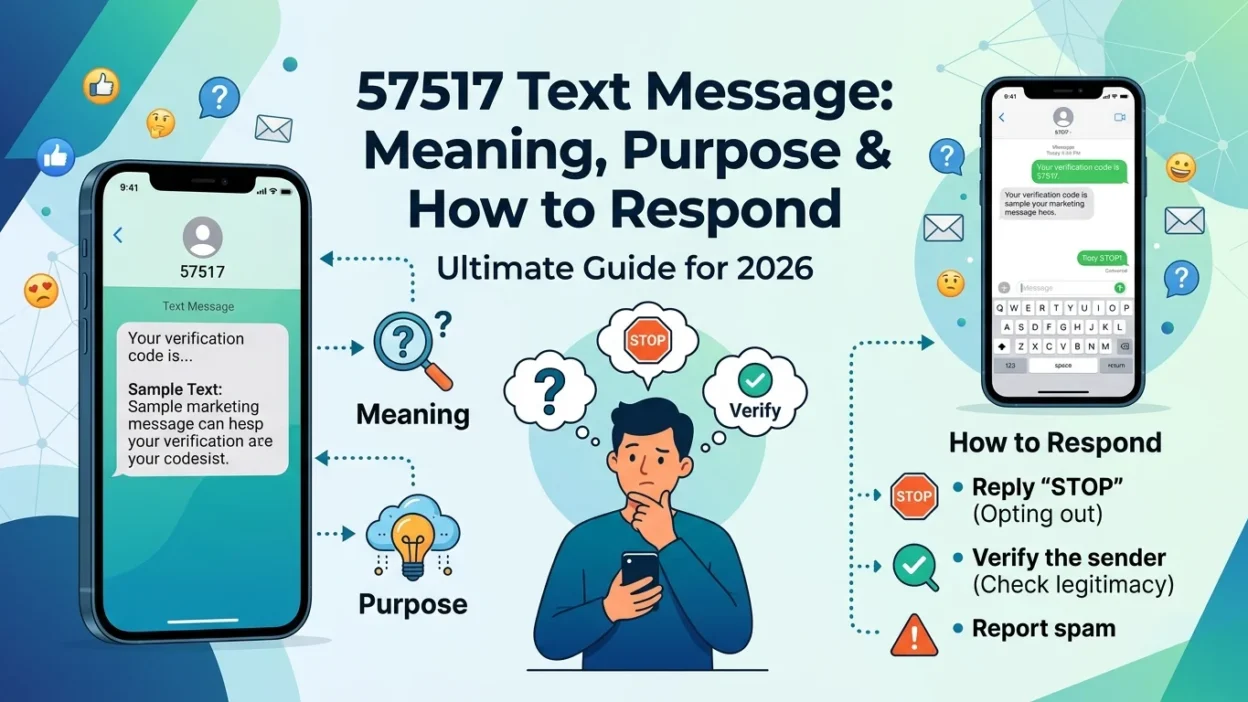
Method 1: Text “STOP” to 57517
The most effective way to stop receiving messages is to reply “STOP” to 57517 . In the United States, it is required that “STOP,” “QUIT,” “CANCEL,” “UNSUBSCRIBE,” or “END” keywords remove users from the campaign sending them messages .
Method 2: Text “HELP” for More Information
You can text “HELP” to 57517 to receive more information about the service . The sender should respond with details about who they are and how to manage your subscription.
Method 3: Block the Number
If the messages persist, you can block the 57517 number on your phone. However, this is not recommended if you are receiving legitimate communications from services you use.
Important Note About Charges
Sending text messages to short code numbers may result in additional charges depending on your mobile plan. Check with your carrier for specific rates.
📋 What If You Don’t Recognize the Sender?
If you receive a 57517 text message from an unknown sender, here are the steps to take.
Do Not Reply Immediately
Avoid replying or clicking any links until you verify the sender’s identity. Replying to spam confirms your number is active.
Check for Identifying Information
Legitimate messages typically identify the company or service sending the message. Look for a brand name or service reference you recognize.
Search Online
Search for “57517 short code” to see if other users have reported the number. Short code directories can help identify the sender.
Report Unwanted Messages
If you believe you are receiving messages by accident or without consent, you can report the sender to your mobile carrier or the FCC.
❌ Common Mistakes About 57517 Messages
Many people misunderstand the nature of the 57517 short code, leading to unnecessary concern.
Mistake 1: Assuming All Messages Are Spam
Not every message from 57517 is spam. Legitimate businesses use this short code for valid communications .
Mistake 2: Ignoring the Message
If you have an account with a service that uses 57517, ignoring the message could mean missing important notifications.
Mistake 3: Replying Without Checking
Replying to spam messages confirms your number is active, which can lead to more spam. However, if you recognize the sender, replying “STOP” is the correct action.
Mistake 4: Confusing the Short Code with Other Uses of 57517
The number 57517 appears in other contexts, such as a port number in malware URLs or a website domain . These are unrelated to the SMS short code. If you receive a text from 57517, it is almost certainly the short code service, not these other uses.
❓ Frequently Asked Questions
What is 57517?
57517 is a short code used by businesses and organizations to send SMS notifications to users who have opted in to receive messages .
Who uses the 57517 short code?
Various businesses, including retailers, restaurants, mobile apps, and marketing companies, use 57517 for notifications and promotions .
Why did I get a text from 57517?
You likely received a text because you opted in to receive notifications from a business or service that uses this short code . These messages may be order updates, verification codes, or promotional offers.
Is 57517 a scam text?
Not necessarily. 57517 is a registered short code used by legitimate businesses . However, scammers can spoof numbers, so always verify the content before taking action.
How do I stop receiving texts from 57517?
Reply “STOP” to 57517 to unsubscribe from messages from this sender . You can also text “HELP” for more information.
Do I get charged for texts from 57517?
Receiving messages is typically free, but sending texts to short codes may result in charges depending on your mobile plan. Check with your carrier for specific rates.
What should I do if I get a suspicious message from 57517?
If you receive a suspicious message, do not click any links or share personal information. Reply “STOP” if you want to unsubscribe, or report the message to your carrier.
Can I block the 57517 short code?
Yes, you can block the number on your phone. However, this is not recommended if you use services that send legitimate notifications from 57517.
✅ Conclusion
The 57517 text message is a legitimate short code used by various businesses and organizations for automated SMS notifications. When you receive a message from this number, it typically comes from a service you have opted into, such as a retailer, restaurant, or mobile app .
If the message is from a service you recognize, no action is required unless you need to act on the information. If you no longer wish to receive messages, reply “STOP” to 57517 to unsubscribe . For suspicious messages, avoid clicking links or sharing personal information. With this knowledge, you can confidently manage any 57517 text message you receive.

Mr. Abdullah is a passionate writer who creates engaging, helpful, and easy-to-understand content for readers. He enjoys sharing fresh ideas, useful insights, and inspiring stories through MessageWritingHub.