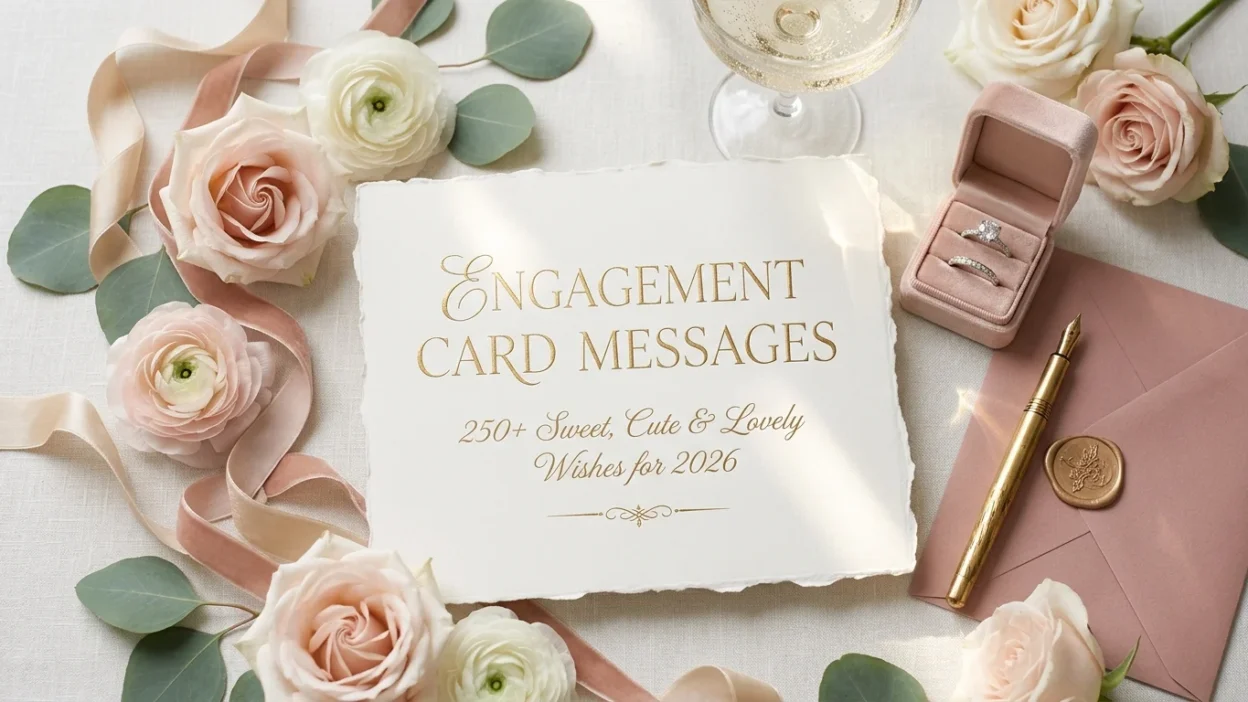
💍 An engagement card message carries more emotional weight than almost any other note you’ll ever write. It celebrates a couple’s decision to spend their lives together, and your words become part of that memory. Whether you’re a close friend, a proud parent, or a coworker who wants to acknowledge the news politely, finding the right words can feel surprisingly difficult.
This guide walks you through everything you need to know about writing engagement card messages. We’ll cover tone, length, personalization, cultural considerations, and the mistakes that turn a heartfelt note into an awkward one. By the end, you’ll feel confident putting pen to paper.
💌 Why Engagement Cards Still Matter in a Digital World
Texts and social media comments disappear quickly. A card, on the other hand, sits on a shelf or in a keepsake box for years. Consequently, couples often treasure these notes long after the wedding photos have faded from their feeds.
Furthermore, a card shows effort. You took time to choose it, write in it, and send it. That effort communicates care in a way a quick “congrats!” never can. Interestingly, many couples report that the cards they received during their engagement became part of their wedding planning memories. Some even display them at the reception.
🎯 Understanding What the Couple Actually Needs
Before you write a single word, consider the couple’s situation. Not every engagement looks the same, and your message should reflect their reality.
For a Traditional Engagement
If the couple followed a conventional path, a warm, celebratory tone works perfectly. You can mention the proposal, express excitement about the wedding, and offer your support during planning.
For a Long-Term Couple Who Finally Made It Official
Couples who dated for years before getting engaged often appreciate acknowledgment of the journey. A message like “It’s about time!” works here, as long as you keep it affectionate rather than critical.
For a Surprise or Quick Engagement
Some couples get engaged within months of meeting. Avoid implying they moved too fast. Instead, focus on their happiness and the obvious connection between them.
For a Second Marriage
This situation requires extra sensitivity. Avoid references to “finally finding the one” or jokes about the first marriage. Simply celebrate this new chapter without comparison.
✍️ The Anatomy of a Great Engagement Card Message
Strong engagement messages share a predictable structure. You don’t need to follow it rigidly, but understanding the pieces helps you build something that flows.
The Opening
Start with a direct congratulation. Keep it warm and simple. “Congratulations on your engagement!” works every time. You can address both partners by name to make it personal.
The Personal Touch
This is where your message becomes yours. Mention a shared memory, a quality you admire in them as a couple, or something specific about their relationship. For example, “I still remember the night you two met at that terrible karaoke bar.”
The Well Wishes
Offer your hopes for their future together. This could reference their wedding day, their life as a married couple, or simply the happiness you wish them. Keep it genuine rather than flowery.
The Closing
Sign off with warmth. “With love,” “Best wishes,” or “So happy for you both” all work well. Include your name clearly, especially if you’re not a close friend.
💐 Engagement Card Messages by Relationship Type
Your relationship to the couple determines your tone, length, and level of intimacy. Here’s how to calibrate your message accordingly.
For a Close Friend
You can be casual, funny, and deeply personal. Inside jokes are welcome. References to shared history make the message feel special. For example, “I’ve watched you two build something real. Now make it official and let’s celebrate!”
For a Family Member
Family messages often blend pride with warmth. Parents might express how proud they are. Siblings might tease affectionately. Grandparents often offer wisdom about lasting love. Whatever your role, let your genuine feelings show.
For a Coworker or Acquaintance
Keep it polite, positive, and relatively brief. You don’t need to gush. A simple “Congratulations on your engagement! Wishing you both a lifetime of happiness” is entirely appropriate. Avoid overly personal comments if you don’t know them well.
For Someone You’ve Lost Touch With
If you’re reconnecting through this news, acknowledge the distance gracefully. “It’s been a while, but I couldn’t let this moment pass without congratulating you” strikes the right balance.
🎨 Matching Your Message to the Card Style
The card itself can guide your tone. A humorous card calls for a lighthearted message. An elegant, minimalist card suits a more formal note. If the card features a specific design, like flowers or a city skyline, you can reference it subtly.
Funny Engagement Cards
These work best for couples with a sense of humor who won’t take offense. Keep jokes affectionate, never critical. Avoid jokes about marriage being an end to freedom or about one partner being “trapped.” Those land badly more often than people expect.
Romantic Engagement Cards
These suit sentimental couples. You can lean into poetic language, but don’t overdo it. Genuine emotion reads better than flowery prose.
Religious Engagement Cards
If the couple shares your faith, referencing blessings or prayers can be meaningful. If you’re unsure about their beliefs, keep the message spiritual but non-specific.
❌ Common Mistakes to Avoid
Even well-meaning messages can misfire. Steering clear of these pitfalls will keep your note on the right side of thoughtful.
Mistake 1: Making It About You
The card is about the couple, not your feelings about marriage or your own engagement story. Avoid lengthy tangents about your own relationship.
Mistake 2: Pressuring Them About the Wedding
Questions like “When’s the big day?” or “Am I invited?” put pressure on the couple. They may not have set a date yet. Even if they have, asking in a card feels presumptuous. Save those questions for later, if at all.
Mistake 3: Offering Unsolicited Advice
Newly engaged couples receive plenty of advice. Your card isn’t the place for marriage tips unless they’ve explicitly asked. Keep the focus on celebration.
Mistake 4: Being Negative or Backhanded
Phrases like “I never thought you’d settle down” or “About time you made an honest person out of him” can sting, even when meant playfully. Reread your message and imagine how it would feel to receive it.
Mistake 5: Ignoring One Partner
If you only know one person in the couple, address both. Writing only to your friend and ignoring their partner sends an unintentional message. A simple “Congratulations to you both” solves this.
Mistake 6: Forgetting to Sign Your Name
This sounds obvious, but it happens constantly. If your handwriting isn’t distinctive, the couple may spend hours guessing who sent the card.
🌍 Cultural and Religious Sensitivity
Engagement traditions vary widely across cultures. In some communities, engagements involve formal ceremonies and family involvement. In others, they’re private moments between two people.
If you’re writing to a couple from a different cultural background, research their traditions. For example, in many South Asian cultures, the engagement is a major family event, and acknowledging the families in your message shows respect. In some Western cultures, the focus stays on the couple.
Religious considerations matter too. If the couple belongs to a faith you don’t share, avoid referencing beliefs you don’t fully understand. A sincere, non-specific message of congratulations always works.
🖋️ Handwriting vs. Printed Messages
Should you write your message by hand or type it? Handwritten notes carry more emotional weight. The couple can see your effort in every stroke. If your handwriting is difficult to read, though, a printed message with a handwritten signature is a reasonable compromise.
For formal engagements, like those announced in newspapers, a handwritten note on quality stationery makes a strong impression. For casual situations, a store-bought card with a heartfelt message is perfectly fine.
📦 When to Send an Engagement Card
Timing matters. Send your card within a few weeks of hearing the news. If you learn about the engagement months later, send it anyway with a brief acknowledgment. “I just heard the wonderful news!” works fine.
If the couple is planning a long engagement, you might send a card immediately and then a separate note closer to the wedding. If the engagement is short, a single card that celebrates both milestones is appropriate.
❓ Frequently Asked Questions
What should I write in an engagement card?
Start with a congratulation, add a personal memory or compliment, express your well wishes, and close warmly. Keep it sincere and focused on the couple.
How long should an engagement card message be?
For close friends and family, a few heartfelt sentences or a short paragraph work well. For acquaintances, two or three sentences are plenty. Quality matters more than length.
Can I include a gift with my engagement card?
Yes, gifts are welcome but not required. If you choose to give one, keep it modest. Engagement gifts are typically smaller than wedding gifts.
What if I don’t know the couple well?
Keep your message polite and general. “Congratulations on your engagement! Wishing you both every happiness” is perfectly appropriate.
Should I mention the wedding in my card?
You can express excitement about the upcoming wedding, but avoid asking specific questions like the date or whether you’re invited. Let the couple share details on their own timeline.
Is it okay to send a digital engagement card?
A digital card works for casual acquaintances or when time is short. However, a physical card carries more sentimental value and is usually preferable for close friends and family.
What should I avoid saying in an engagement card?
Avoid pressuring questions, unsolicited advice, backhanded compliments, and jokes about marriage being a trap. Also, don’t make the message about yourself.
Can I write an engagement card for a same-sex couple?
Absolutely. The same principles apply. Congratulate them warmly, celebrate their relationship, and avoid making their identity the focus of the message. They’re a couple in love, just like anyone else.
✅ Conclusion
An engagement card message is a small gesture with lasting impact. The couple will likely keep your card for years, and your words will become part of their story. Take a few extra minutes to personalize your note. Reference a shared memory, celebrate their specific relationship, and avoid the common mistakes that turn good intentions into awkward moments.
Whether you’re a best friend, a proud parent, or a casual acquaintance, the formula remains simple: congratulate sincerely, add something personal, wish them well, and sign your name. Do that, and your card will mean far more than a quick text ever could.

Mr. Abdullah is a passionate writer who creates engaging, helpful, and easy-to-understand content for readers. He enjoys sharing fresh ideas, useful insights, and inspiring stories through MessageWritingHub.