
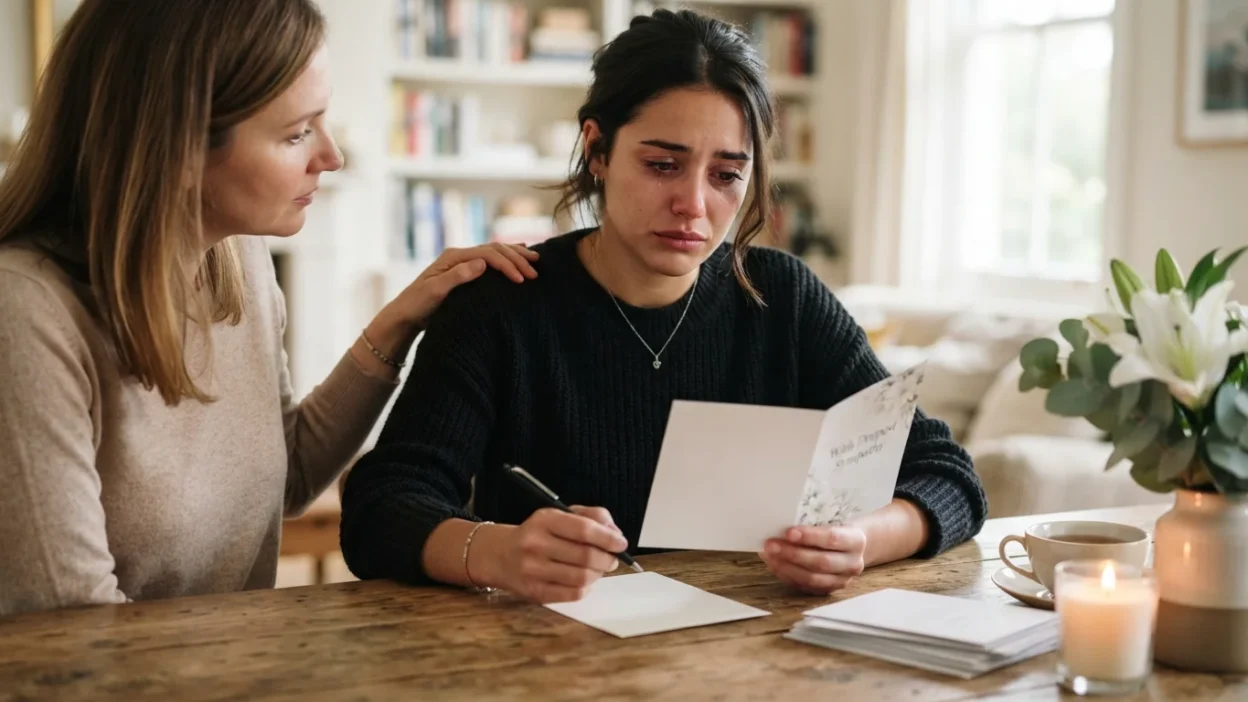
💔 When someone you care about loses a loved one, finding the right words can feel impossible. You want to offer comfort, but you worry about saying the wrong thing. You want to help, but you don’t know how. A death condolence message carries real weight because it acknowledges pain that can’t be fixed. Unlike other messages, this one isn’t about solving a problem. It’s about showing up.
This guide will help you write condolence messages that feel genuine, appropriate, and comforting. We’ll cover what to say, what to avoid, and how to adapt your message for different relationships and situations.
💌 What Is a Condolence Message?
A condolence message is a written expression of sympathy sent to someone grieving a loss. It can take many forms: a text message, a card, an email, a social media comment, or a handwritten letter. The purpose stays the same regardless of format. You’re acknowledging the person’s loss and offering your support.
Importantly, a condolence message isn’t about making the grieving person feel better immediately. That’s not possible. Instead, it’s about letting them know they’re not alone. It’s a small gesture that says, “I see your pain, and I’m here.”
Why Condolence Messages Matter
Grief often isolates people. Friends and family sometimes avoid the grieving person because they don’t know what to say. Consequently, the bereaved person can feel abandoned precisely when they need support most. A condolence message breaks that silence. It tells the griever that their loss matters and that someone remembers.
Research on grief shows that acknowledgment, not advice, provides the most comfort. People want their loss recognized. They want to know their loved one mattered to others too.
✍️ The Core Principles of a Good Condolence Message
Every effective condolence message shares certain qualities. Understanding these principles helps you write something meaningful even when you’re unsure.
Sincerity Over Perfection
You don’t need poetic language or perfect phrasing. What matters is that your words come from genuine care. A simple “I’m so sorry for your loss” said honestly means more than an elaborate message that feels rehearsed.
Specificity Adds Comfort
Generic messages feel hollow. Instead of “I’m sorry for your loss,” try mentioning something specific. For example, “I’m so sorry about your mother. She always made me feel welcome in your home.” This shows you knew the person and that their memory matters.
Acknowledgment Without Explanation
Avoid trying to explain the loss or find meaning in it. Phrases like “Everything happens for a reason” or “They’re in a better place” often cause more pain than comfort. The grieving person doesn’t need explanations. They need acknowledgment.
Offer Concrete Support
Instead of saying “Let me know if you need anything,” which puts the burden on the griever, offer something specific. “I’ll bring dinner on Thursday” or “I can watch your kids this weekend” removes the need for them to ask.
📝 Condolence Messages for Different Situations
Different losses and relationships call for different approaches. Here are examples across common situations.
For a Close Friend Who Lost a Parent
“I’m heartbroken for you. Your dad was such a kind man, and I know how much he meant to you. I’m here for whatever you need, whenever you need it.”
For a Colleague Who Lost a Loved One
“I was so sorry to hear about your loss. Please know you’re in my thoughts. Take all the time you need, and don’t worry about anything here.”
For a Friend Who Lost a Child
This is one of the hardest messages to write. Avoid platitudes. Instead, try: “There are no words for something like this. I’m here, and I’m not going anywhere. I’ll bring dinner tomorrow, and we can just sit together if you want.”
For Someone Who Lost a Pet
Pet loss is real grief, even though some people minimize it. “I’m so sorry about [pet’s name]. They were such a good companion, and I know how much they meant to you.”
For a Distant Acquaintance
Keep it brief and respectful. “I was saddened to hear about your loss. Sending my sincere condolences.”
❌ What Not to Say in a Condolence Message
Certain phrases, however well-intentioned, often hurt more than help. Avoid these.
Don’t Minimize the Loss
Phrases like “At least they lived a long life” or “You can always have another child” dismiss the griever’s pain. The length of a life doesn’t reduce the grief of losing it.
Don’t Compare Grief
Avoid “I know exactly how you feel.” Everyone grieves differently, even after similar losses. Instead, say “I can’t imagine how hard this is.”
Don’t Give Unsolicited Advice
The grieving person doesn’t need instructions on how to feel or what to do. Skip “You should stay busy” or “You need to be strong.”
Don’t Make It About You
Sharing your own loss can sometimes help, but only if the focus stays on the griever. Avoid lengthy stories about your own experiences.
Don’t Use Religious Phrases Unless You Know They’ll Help
If you’re unsure about the person’s beliefs, avoid phrases like “God needed another angel.” For some, faith brings comfort. For others, it adds pain.
📱 Condolence Messages by Format
The format affects tone and length. Here’s how to adapt.
Text Messages
Texts work for quick, sincere condolences. Keep them short but specific. Example: “I just heard about your mom. I’m so sorry. Thinking of you and your family.”
Cards and Letters
Written cards allow more space for personal reflection. You can share a memory, express ongoing support, and sign with warmth. Handwritten messages often get saved and reread.
Social Media Comments
Public comments can feel performative, but they also show support. Keep them brief and respectful. Better yet, send a private message if you have that option.
Emails
For professional contacts, email works well. Keep it formal but warm. “Please accept my sincere condolences on the passing of your father. My thoughts are with you and your family.”
⏰ Timing Your Condolence Message
When should you send a condolence message? The answer is simple: as soon as you learn of the loss, or as soon as you can.
The First Days
Immediately after a loss, the family is often overwhelmed with logistics. A message sent in the first few days still matters. It lets them know people care.
Weeks and Months Later
Many people stop reaching out after the funeral. However, grief doesn’t end when the service does. A message sent weeks or months later can be deeply meaningful. “I was thinking about you today and wanted you to know I’m still here.”
Anniversaries and Holidays
Birthdays, holidays, and death anniversaries often hit hard. A simple “Thinking of you today” on those dates can provide comfort.
🎯 How to Follow Up After the Initial Message
A condolence message opens the door. What you do next matters too.
Check In Periodically
Set a reminder to reach out again in a few weeks. Grief lasts longer than most people expect. A simple “How are you doing today?” shows ongoing care.
Offer Practical Help
Instead of asking what they need, offer specific things. “Can I pick up groceries for you?” or “I’m free Saturday if you want company.”
Remember Their Loved One
Talking about the deceased person can be comforting. Share memories. Say their name. Many grieving people appreciate knowing their loved one isn’t forgotten.
❓ Frequently Asked Questions
What is the best condolence message?
The best condolence message is sincere, specific, and focused on the griever. Mention something you appreciated about their loved one, acknowledge the pain, and offer concrete support. There’s no single perfect phrase—authenticity matters more than perfection.
How do you write a short condolence message?
Keep it brief but personal. For example: “I’m so sorry for your loss. [Name] was a wonderful person, and I’m thinking of you.” Short messages work well for texts or when you don’t know the person well.
What should you not say in a condolence message?
Avoid clichés like “Everything happens for a reason” or “They’re in a better place.” Don’t minimize the loss, compare grief, or give unsolicited advice. Also avoid making the message about your own feelings or experiences.
Is it okay to send a condolence message by text?
Yes, text messages are acceptable for condolences, especially if that’s your primary way of communicating. Keep the message sincere and specific. However, for closer relationships, a card or handwritten note often carries more weight.
How long should a condolence message be?
There’s no fixed length. A few sincere sentences work well for most situations. Cards and letters can be longer, especially if you’re sharing a memory. What matters is authenticity, not word count.
Should I send flowers with my condolence message?
Flowers are a traditional gesture, but they’re not always appropriate. Some families request donations to charity instead. Check the obituary or ask a close family member about preferences.
What if I didn’t know the deceased person?
You can still send a condolence message. Focus on your care for the griever. “I didn’t know your father, but I know how much he meant to you. I’m so sorry.”
When is it too late to send a condolence message?
It’s never too late. Grief doesn’t follow a timeline. A message sent months or even years later can still bring comfort. “I know it’s been a while, but I was thinking about you and wanted to say I’m sorry.”
✅ Conclusion
A death condolence message doesn’t need perfect words. It needs honesty, care, and a willingness to show up when someone is hurting. The grieving person won’t remember your exact phrasing. They’ll remember that you reached out when others stayed silent. Keep your message sincere, specific, and focused on the griever. Avoid clichés and unsolicited advice. And remember that following up matters just as much as the first message. Grief lasts far longer than most people realize, and your ongoing presence can be one of the greatest gifts you offer.

Mr. Abdullah is a passionate writer who creates engaging, helpful, and easy-to-understand content for readers. He enjoys sharing fresh ideas, useful insights, and inspiring stories through MessageWritingHub.