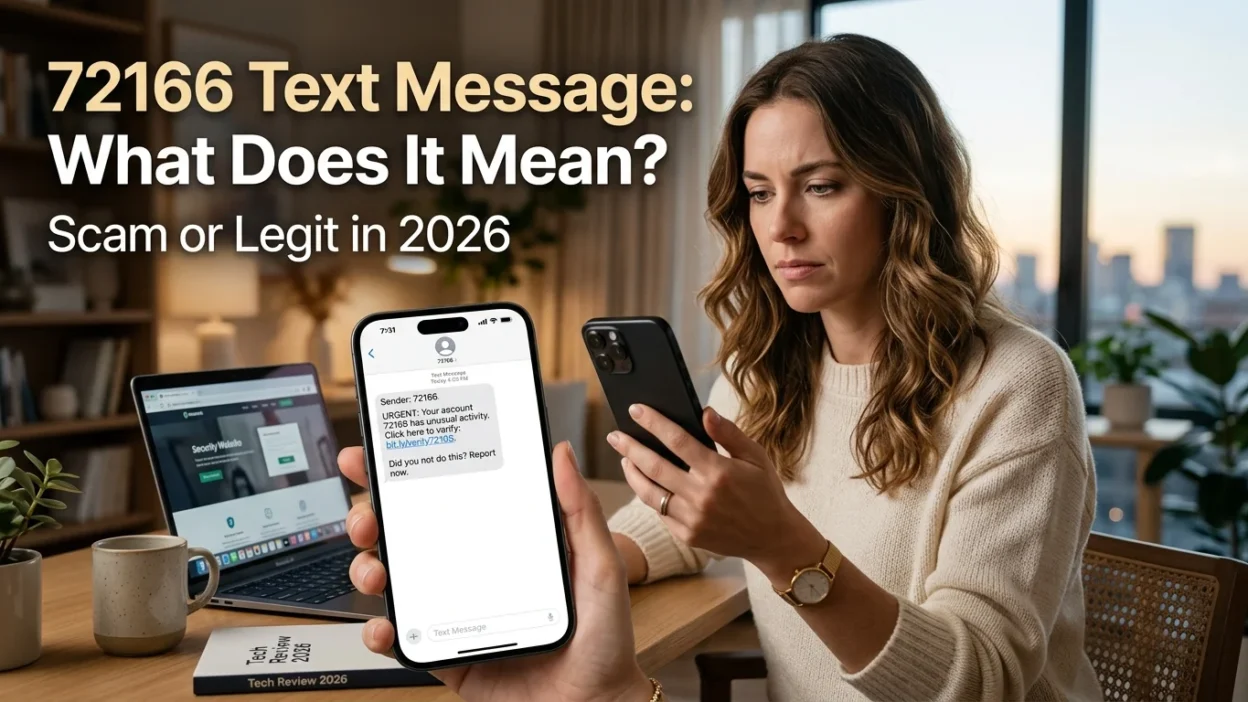
📱 Your phone buzzes with a text message from a number you don’t recognize: 72166. The message claims to be from Chase and mentions a suspicious charge on your card. Your heart races for a moment. Is this real? Should you respond? Could it be a scam designed to steal your information?
The 72166 text message is a legitimate short code that Chase Bank uses for fraud and security alerts . However, scammers frequently spoof this number to trick people into giving up sensitive information. Consequently, understanding the difference between a genuine alert and a fraudulent one is essential for protecting your money and your identity.
What Is the 72166 Short Code?
The number 72166 is a registered short code, which is a five or six-digit number that businesses use to send SMS and MMS messages to mobile phones . Unlike standard ten-digit phone numbers, short codes are designed for high-volume, automated messaging. Companies use them for notifications, promotions, and account alerts.
Chase Bank specifically uses 72166 as one of its official short codes for fraud and security alerts . When Chase detects suspicious activity on your account, it may send an interactive text message from this number. The message typically asks you to confirm whether you made a particular purchase.
How Chase Uses the 72166 Short Code
Chase employs the 72166 text message as part of its account fraud and security system. When the bank has reason to believe someone may be attempting to access your accounts or use your card without authorization, it sends an alert .
What the Messages Look Like
A legitimate Chase fraud alert from 72166 usually follows a specific format. The message often begins with “FREE MSG: Chase Fraud” and includes details about the transaction in question. For example, you might receive a message stating: “Chase Fraud: We Declined $119.00 with card ending #### at Amazon Prime on 04/02. Was this you? Reply YES or NO.” .
After you respond, Chase may send a follow-up message. If you confirm the charge was not yours, the bank typically deactivates your card and instructs you to call a specific phone number to resolve the issue . This follow-up number is usually one of Chase’s official fraud support lines.
How Many Messages You Might Receive
Chase notes that you may receive up to ten messages per incident . This allows for back-and-forth confirmation and instructions for resolving the issue.
How to Stop Receiving Messages from 72166
If you want to stop receiving fraud alerts from 72166, you can opt out. To do this, reply “STOP” to any message you receive from the short code . You don’t need to send “STOP” to every Chase fraud short code individually. Sending it to one will stop messages from all of them .
Getting Help with 72166 Messages
If you need assistance with messages from 72166, you can reply “HELP” to any alert you receive . This will provide you with information about the service.
The Scam: How Fraudsters Exploit 72166
Despite 72166 being a legitimate Chase short code, scammers have found ways to exploit it. The problem is not with the short code itself but with spoofing technology.
The Spoofing Problem
Scammers can manipulate caller ID and SMS sender information to make their messages appear to come from 72166 . This is called spoofing. When a scammer spoofs the 72166 short code, their fraudulent message appears in the same text thread as legitimate Chase alerts, making it extremely difficult to distinguish between the two .
In one documented case, a user received a text from “721-66” claiming to be Chase Fraud. The message included the last four digits of their card and asked them to verify a declined charge. After replying “No,” the user received instructions to call a phone number. When they called Chase directly using the number on the back of their card, they discovered the charges were real but the situation had been manipulated by scammers .
The Goal of the Scam
Scammers who spoof 72166 typically aim to achieve one of several goals. They might want you to call a fake customer service number where they can extract your personal information. Alternatively, they might ask you to reply with sensitive data like your account number or PIN. In some cases, they simply want to confirm that your phone number is active so they can target you with more scams.
How to Verify If a 72166 Message Is Real
Distinguishing between a legitimate 72166 text message and a spoofed one requires careful attention. Fortunately, there are reliable steps you can take to verify authenticity.
Check the Message Content
Legitimate Chase fraud alerts from 72166 typically include specific details about a transaction. They mention the amount, the merchant, and the last four digits of your card . If the message is vague, contains grammatical errors, or asks for information Chase would never request, it’s likely a scam.
Never Call Numbers from the Text
This is the most critical rule. If a 72166 text message instructs you to call a phone number to resolve an issue, do not use that number . Instead, call the customer service number on the back of your Chase card or log into your Chase account online to check for alerts. Scammers often provide fake phone numbers that connect you to their operation.
Log Into Your Chase Account
The safest way to verify a fraud alert is to log into your Chase account directly. If there is a legitimate issue with your card, you will see a notification when you log in. You can also check your recent transactions to see if any suspicious charges appear .
Contact Chase Through Official Channels
If you’re still unsure, call Chase using the number on the back of your card or the number listed on your monthly statement . A customer service representative can confirm whether a fraud alert was sent and help you resolve any issues.
Common Mistakes to Avoid
When dealing with 72166 text messages, certain mistakes can put your account and personal information at risk.
Mistake 1: Replying to Suspicious Messages
If you receive an unexpected 72166 text message, think twice before replying. Responding confirms that your phone number is active and monitored, which may lead to more scam attempts. Even replying “STOP” to a spoofed message may not work as expected, since the scammer’s system may not honor the request .
Mistake 2: Calling Numbers Provided in the Text
As mentioned earlier, never call a phone number provided in a suspicious 72166 text message . This is the most common way people fall victim to these scams. Always use independently verified contact information.
Mistake 3: Sharing Personal Information
Chase will never ask you to provide your full account number, PIN, or password via text message. If a message from 72166 requests this information, it’s definitely a scam. Legitimate fraud alerts only ask you to confirm whether a specific charge was authorized.
Mistake 4: Assuming Short Codes Can’t Be Spoofed
Some people believe that short codes like 72166 are impossible to spoof. However, scammers have found ways to manipulate sender information, so you should never assume a message is legitimate simply because it appears to come from a known short code .
When Not to Use the 72166 Short Code
The 72166 short code is designed for receiving alerts, not for general communication. You should not use it to send casual messages or expect a human response. If you need to contact Chase, use the phone number on your card or the bank’s official website.
Additionally, 72166 is specific to Chase Bank. If you don’t have a Chase account but receive messages from this number, they are almost certainly fraudulent. Don’t engage with them.
Expert Tips for Staying Safe
Protecting yourself from 72166-related scams requires vigilance and good habits.
Save Chase’s Official Numbers
Save Chase’s customer service number in your phone contacts. This makes it easy to verify alerts without relying on numbers provided in text messages.
Enable Two-Factor Authentication
Enable two-factor authentication on your Chase account. This adds an extra layer of security, making it harder for scammers to access your account even if they obtain some of your information.
Monitor Your Accounts Regularly
Check your bank and credit card statements regularly. If you spot unauthorized charges, report them to Chase immediately using official contact information.
Report Suspicious Messages
If you receive a suspicious 72166 text message, report it. You can forward spam texts to 7726 (SPAM) in the United States. You can also notify Chase directly so they can investigate.
Frequently Asked Questions
Is 72166 a legitimate Chase number?
Yes, 72166 is a registered short code that Chase Bank uses for fraud and security alerts . However, scammers can spoof this number, so you should always verify messages through official channels.
What should I do if I receive a 72166 text message?
If you receive a 72166 text message, do not call any numbers provided in the message. Instead, log into your Chase account or call the number on the back of your card to verify the alert .
Can I stop receiving texts from 72166?
Yes, you can opt out by replying “STOP” to any message from 72166 . You don’t need to send “STOP” to each Chase fraud short code individually.
What does “FREE MSG: Chase Fraud” mean?
This is the typical opening for legitimate Chase fraud alerts sent from 72166 . The message will include details about a transaction and ask you to confirm whether you authorized it.
Why did I get a 72166 text if I don’t have a Chase account?
If you don’t have a Chase account and receive a message from 72166, it is almost certainly a scam. Do not respond or call any numbers provided. Report the message and delete it.
Is 72166 the only Chase fraud short code?
No, Chase uses multiple short codes for fraud alerts, including 28107 and 36640 . The same opt-out rules apply to all of them.
What happens if I reply “YES” to a fraudulent 72166 message?
If you reply to a spoofed message, you may confirm your number is active, leading to more scam attempts. If you believe you’ve interacted with a scammer, monitor your accounts closely and contact Chase immediately.
Can a 72166 message be a scam even if it’s in the same thread as real alerts?
Yes, this is exactly what spoofing allows. Scammers can make their messages appear in the same conversation thread as legitimate Chase alerts, making them very difficult to distinguish . Always verify through official channels.
Conclusion
The 72166 text message is a legitimate short code that Chase Bank uses for fraud and security alerts . When you receive a genuine alert, it provides specific transaction details and asks you to confirm whether you authorized a charge. However, scammers frequently spoof this number to trick people into calling fake customer service lines or sharing personal information .
The golden rule for dealing with any 72166 text message is simple: never use the contact information provided in the message itself. Instead, log into your Chase account directly or call the number on the back of your card. By following this practice and staying informed about common scams, you can protect your accounts and your peace of mind. When in doubt, verify through official channels, and never let urgency push you into making a mistake.

Mr. Abdullah is a passionate writer who creates engaging, helpful, and easy-to-understand content for readers. He enjoys sharing fresh ideas, useful insights, and inspiring stories through MessageWritingHub.