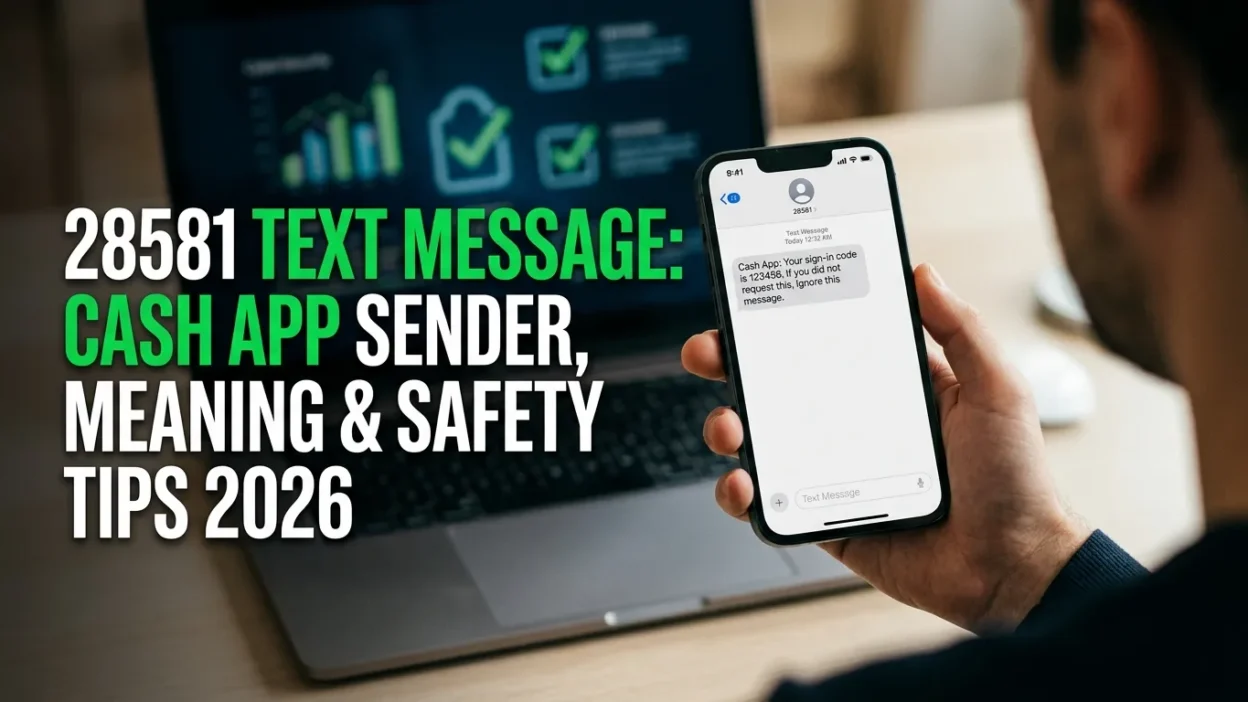
A 28581 text message is almost certainly from Cash App. That five-digit number is the payment app’s registered short code for sign-in verification codes, transaction alerts and security notifications. If you use Cash App and you’re trying to log in or confirm a payment, a text from 28581 is a normal part of the process. It’s not a random spam number and the code itself is legitimate.
The complication is that scammers know this too. They exploit the trust people place in recognizable short codes and they’ve built schemes around Cash App’s verification system. So while the number is real, not every situation involving a 28581 text is safe. This guide explains what the code does, why you might be getting messages you didn’t request and how to tell the difference between a routine alert and an active attack.
What the 28581 Short Code Actually Is
Short codes are five- or six-digit numbers that businesses use to send automated text messages. Unlike a regular phone number tied to a person or a single line, a short code is a broadcast channel designed for high-volume communication. Cash App, which is owned by Block, Inc. (formerly Square), uses 28581 for its text notification program .
The code handles a few specific jobs. It sends one-time sign-in codes when you log in from a new device or after a security change. It delivers transaction alerts when money moves in or out of your account. It also sends security notifications if the system detects unusual activity, like a login from an unfamiliar location . Texting HELP to 28581 returns a standard response identifying Cash App as the sender and texting STOP opts you out of future messages .
Why You’re Getting Texts from 28581
There are three main scenarios and they range from completely routine to genuinely dangerous. Knowing which one you’re in determines what to do next.
Scenario 1: You Requested a Code
This is the safe, expected case. You opened Cash App, tried to log in, or changed a security setting and the app sent a verification code to your phone. The message typically looks like: “Cash App: 123-456 is your sign in code. Do not share it with anyone.” . You enter the code in the app and the process completes. Nothing is wrong.
Scenario 2: Someone Mistyped Their Number
This happens more often than people realize. Another person entered your phone number by accident during sign-up or login. You receive a code meant for them. If you don’t have a Cash App account tied to your number, the message is harmless. Ignore it or reply STOP to stop future messages .
Scenario 3: Someone Is Trying to Access Your Account
This is the dangerous scenario. A scammer has your phone number and is attempting to log into a Cash App account linked to it. Cash App sends the real verification code to your phone and the attacker needs you to hand it over. They may follow up with a phone call claiming to be Cash App support, telling you to read back the code to “cancel a fraudulent charge” or “verify your identity” . The code is real. The person asking for it is not.
How the Scam Works
The scheme relies on a simple psychological trick. The scammer triggers a real security response, then inserts themselves into the process before you can finish it.
They start a login attempt using your phone number. Cash App sends the code to you. Then the scammer contacts you, often by phone, pretending to be from Cash App’s fraud department. They create urgency: “There’s a suspicious charge, we need to verify it’s you, read me the code.” If you comply, they use the code to complete the login and take over the account .
The critical detail is that Cash App’s actual support team will never ask for your sign-in code. That’s the line to remember. Anyone who requests it is a scammer, regardless of what number appears on your caller ID.
How to Tell a Real 28581 Message from a Fake One
The short code itself is legitimate, but scammers can spoof numbers and copy wording. The message format is the best clue.
Real messages look like this:
- A short line with a numeric code and a warning not to share it
- No links, no phone numbers to call, no urgent demands
- The sender is 28581
Fake or dangerous messages often include:
- A link to “verify” or “secure” your account (the link goes to a phishing site)
- A phone number to call about a “pending charge” or “locked account”
- A request for your PIN, password, or the code itself
- A sense of panic: “Your account will be suspended immediately”
If a message from 28581 contains a link or asks you to call someone, treat it as a scam. Open Cash App directly from your app icon instead of clicking anything in the text.
What to Do If You Get a 28581 Text You Didn’t Request
Your response depends on whether you have a Cash App account and whether the code was expected.
If You Have Cash App
Don’t share the code with anyone. Open the app and check your recent activity. If you see a login attempt you didn’t make, change your password immediately and contact Cash App support through the official app. If no money has moved and no suspicious activity appears, you can ignore the code. Someone may have mistyped their number, or an attacker may have tried and failed .
If You Don’t Have Cash App
The code is harmless. Someone likely entered your number by mistake. You can ignore it, or reply STOP to 28581 to prevent future messages. Don’t click any links and don’t call any numbers included in the text .
If You Shared the Code
Act quickly. Log into Cash App, change your password and review your account for unauthorized transactions. Contact Cash App support through the app or the official website. If money is missing, report it to Cash App and consider filing a report with the FTC or your local authorities .
How to Stop Messages from 28581
If you want the texts to stop, the standard opt-out command works. Reply STOP to any message from 28581. You should receive a confirmation and the messages should cease .
If STOP doesn’t work, you can also adjust your notification preferences in the Cash App settings. Open the app, go to your profile and look for notification or communication settings. Turning off text alerts there is a more permanent fix.
Blocking the short code through your phone’s settings is a last resort. Both iOS and Android allow you to block specific numbers, including short codes. This prevents future messages from arriving, but it doesn’t remove your number from Cash App’s system.
Frequently Asked Questions
Is 28581 definitely Cash App?
Yes. The 28581 short code is registered to Cash App (Block, Inc.) and is used for sign-in codes, transaction alerts and security notifications . Texting HELP returns a Cash App-branded response.
Why did I get a Cash App code when I didn’t try to log in?
Someone entered your phone number during a login or sign-up attempt. If you have a Cash App account, this could mean someone is trying to access it. If you don’t, it’s likely a wrong-number mistake. In either case, don’t share the code with anyone .
Is it safe to reply to 28581?
You can reply with STOP to opt out or HELP for information. Those are the commands the system recognizes. Replying with anything else won’t reach a person and may not get a useful response.
What if someone calls me claiming to be Cash App and asks for the code?
That’s a scam. Cash App support will never ask for your sign-in code. Hang up. Don’t call back the number they provide. Contact Cash App through the official app or website instead .
Can I click the link in a 28581 text?
Real Cash App verification messages don’t include links. If a 28581 message contains a link, treat it as a phishing attempt. Open Cash App directly from your app icon instead .
How do I stop 28581 messages?
Reply STOP to any message from the short code. You can also turn off text notifications in the Cash App settings. If those don’t work, block the number on your phone.
Conclusion
A 28581 text message is Cash App’s short code for verification codes and account alerts. If you requested a code, the message is routine and safe. If you didn’t, the situation requires attention. Never share a verification code with anyone, even if they claim to be from Cash App. Open the app directly to check your account and treat any message that includes a link or a callback number as suspicious. The code is real, but the scam around it is real too. Knowing the difference is what keeps your account safe. 🔐

Mr. Abdullah is a passionate writer who creates engaging, helpful, and easy-to-understand content for readers. He enjoys sharing fresh ideas, useful insights, and inspiring stories through MessageWritingHub.