
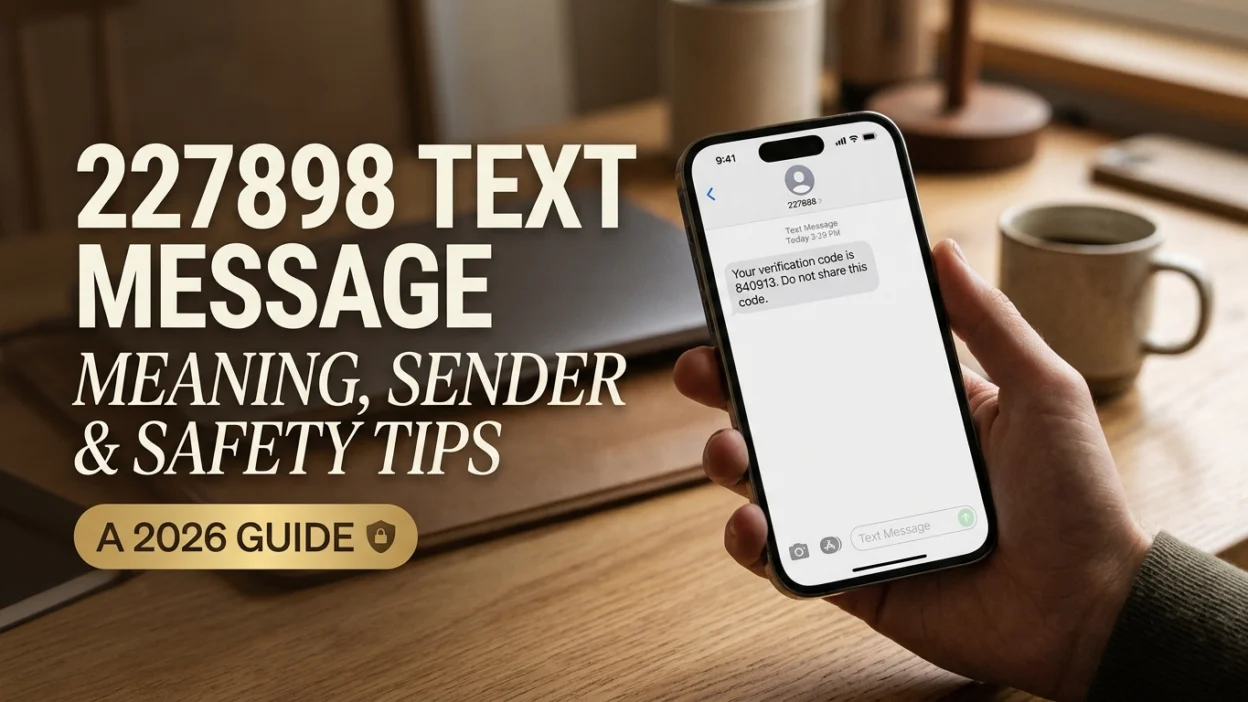
A 227898 text message usually isn’t a scam. In most cases, it’s a legitimate alert from Capital One, one of the largest banks in the United States. Capital One lists 227898 as one of its official short codes for sending account servicing messages, including fraud alerts and auto finance notifications . That said, a legitimate sender doesn’t guarantee a legitimate message. Scammers frequently impersonate banks and a familiar-looking short code can still deliver a phishing link if you’re not paying attention. This guide explains what 227898 is, how to tell a real Capital One alert from a fake one, and what to do if something feels off.
Who Owns the 227898 Short Code?
Capital One owns 227898. The bank’s own SMS terms page confirms that it uses this six-digit number for important account servicing messages, with fraud alerts being the primary use case . The short code has been registered since 2015, and independent short-code directories list it as a Capital One Alert number .
Short codes like this exist because banks need a reliable, high-volume channel for time-sensitive communication. A fraud alert sent from a regular ten-digit number would be impossible to verify and easy to spoof. A registered short code goes through carrier verification, which gives it a layer of trust that a random number doesn’t have.
What Kind of Messages Come From 227898?
Capital One uses 227898 for a narrow set of communications. Understanding the expected content helps you judge whether a message is genuine.
Fraud Alerts
This is the main purpose of the short code. If Capital One’s systems detect unusual activity on your account, they may send a text asking you to confirm whether a transaction was authorized. A real fraud alert typically asks a yes-or-no question or directs you to call the number on the back of your card. It should not ask you to click a link and enter your full card number or password.
Account Servicing Notifications
Beyond fraud alerts, Capital One uses 227898 for other account-related messages. These might include payment reminders, account status updates, or auto finance servicing notifications . The content should always relate to an account you actually hold with Capital One.
What 227898 Does Not Do
A legitimate 227898 message will not ask you to reply with your full Social Security number, your online banking password, or a one-time verification code. It will not threaten immediate account closure unless you click a link. And it will not direct you to a website that isn’t capitalone.com. These are the hallmarks of impersonation scams, not real bank alerts .
How to Tell a Real 227898 Text From a Fake One
The short code itself is legitimate, but scammers have gotten good at mimicking official communications. Here’s how to separate the real from the fake.
Check What the Message Asks You to Do
Real Capital One alerts usually ask you to respond with a simple command or to call the number on your card. If the message pushes you to click a link, especially a shortened one, treat it with suspicion. Phishing scams rely on links that lead to look-alike websites designed to harvest your login credentials .
Look for Urgency and Threats
Scammers create panic. A fake message might say your account will be locked in 24 hours or that a suspicious transaction requires immediate action via a link. Legitimate fraud alerts also create some urgency, but they direct you to verified channels, not to a link inside the text.
Verify Through the Official App
The safest way to confirm any Capital One message is to open the Capital One app or log into your account through a browser. If there’s a real fraud alert or account issue, it will appear there. You never need to act on a text message alone. This step takes thirty seconds and eliminates the risk entirely .
What to Do If You Receive a 227898 Message
Your response depends on whether you’re a Capital One customer and whether the message matches your expectations.
If You’re a Capital One Customer and Expect the Alert
If you recently made a purchase that might have triggered a fraud alert, or if you’re waiting for a verification code, the message is likely legitimate. Follow the instructions carefully, but verify through the app if anything feels unclear. Never share a one-time code with anyone who contacts you, even if they claim to be from the bank.
If You’re a Capital One Customer but Didn’t Expect It
Open the Capital One app. If the alert is real, it will be there. If it isn’t, the message is either a mistake or a scam. Do not click any links in the text. You can also call the number on the back of your card to confirm whether any action is needed.
If You’re Not a Capital One Customer
You shouldn’t be receiving messages from 227898 at all. This could mean someone used your phone number by mistake, or a scammer is casting a wide net. Don’t reply. Don’t click anything. Simply delete the message. If the messages continue, block the number.
How to Stop Messages From 227898
If you’re a Capital One customer and want to stop receiving texts, reply with STOP to 227898. Capital One’s terms confirm that STOP ends further messages, and HELP provides assistance . If you’re not a customer, blocking the number through your phone’s settings is the cleanest solution.
The Scam Risk: When 227898 Is Impersonated
Capital One is one of the most impersonated banks in text scams. Scammers know that people trust a message from a bank’s official short code. They also know that a fraud alert is one of the few texts people will actually open and act on.
The impersonation usually works like this. You receive a text that looks like it’s from Capital One, sometimes even appearing in the same message thread as real alerts. The message claims there’s a problem with your account and provides a link to “verify” your identity. The link leads to a fake Capital One login page. If you enter your credentials, the scammer has them .
The defense is simple but requires discipline. Never click a link in a bank text. Always verify through the app. And remember that a real bank will never ask for your password or a one-time code in a text message.
Common Mistakes People Make With Bank Short Codes
Replying to a Suspicious Message
If a message from 227898 looks fake, don’t reply with “STOP” or anything else. Replying confirms your number is active and monitored by a real person, which can lead to more spam . Only reply with STOP if you’re confident the message is from Capital One and you want to opt out of legitimate alerts.
Assuming the Short Code Guarantees Safety
A verified short code is harder to spoof than a regular number, but it’s not impossible. Scammers can use sender ID spoofing or compromise systems to send messages that appear to come from 227898. The number is a signal, not a guarantee. Judge every message by its content, not just its sender .
Clicking Links Without Thinking
Bank phishing scams work because the fake websites look real. The URL might be slightly off, or the page might ask for information a real bank would never request in that context. If you didn’t initiate the interaction, don’t click. Open your app instead.
Platform Differences: How to Block 227898
If you want to stop receiving messages from 227898 and you’re not a Capital One customer, blocking is straightforward.
On iPhone, open the message, tap the number at the top, tap Info, and select Block this Caller . On Android, open the message, tap the three-dot menu, and choose Block number or Block & report spam, depending on your device .
For legitimate Capital One customers who simply want fewer texts, the STOP command is the right approach. Blocking a legitimate short code could prevent you from receiving real fraud alerts, which defeats the purpose of having them.
Frequently Asked Questions
Is 227898 a real Capital One number?
Yes. Capital One’s official SMS terms list 227898 as one of its short codes for account servicing messages, primarily fraud alerts and auto finance notifications . Independent short-code directories confirm the registration .
Is a text from 227898 always safe?
No. The short code belongs to Capital One, but scammers can impersonate it or spoof the sender ID. A message from 227898 is likely legitimate if it matches something you’re expecting and doesn’t ask for sensitive information via a link. If it pressures you to click or share a code, treat it as suspicious regardless of the sender number .
What should I do if I get a 227898 text and I’m not a Capital One customer?
Don’t reply and don’t click any links. Delete the message. If it keeps coming, block the number. You can also report it by forwarding the message to 7726 (SPAM) in the United States, which helps carriers track and block scam campaigns .
Can I reply STOP to 227898?
Yes, if you’re a Capital One customer receiving legitimate alerts. Capital One’s terms confirm that STOP ends further messages . If the message is suspicious, don’t reply at all. Replying to a scam confirms your number is active .
What does a real Capital One fraud alert look like?
Real fraud alerts usually ask you to confirm a transaction with a simple response or direct you to call the number on your card. They don’t ask you to click a link and enter your full account credentials. If you’re unsure, open the Capital One app and check for alerts there.
Can 227898 texts be a phishing attempt?
Yes. Scammers frequently impersonate Capital One, and they may use a variety of numbers, including spoofed short codes. The content of the message is the best indicator. A phishing attempt will push you toward a link, create panic, or ask for information a bank would never request in a text .
Conclusion
A 227898 text message is usually a legitimate alert from Capital One, most often a fraud notification or account servicing update. The short code is registered to the bank and has been in use for years. But legitimacy of the sender doesn’t guarantee legitimacy of every message. Scammers impersonate banks constantly and the best defense is a simple habit: when a bank text arrives, open the app and verify. Don’t click links. Don’t share codes. The thirty seconds it takes to check the official app is worth more than any alert is worth in a hurry. 🔐

Mr. Abdullah is a passionate writer who creates engaging, helpful, and easy-to-understand content for readers. He enjoys sharing fresh ideas, useful insights, and inspiring stories through MessageWritingHub.