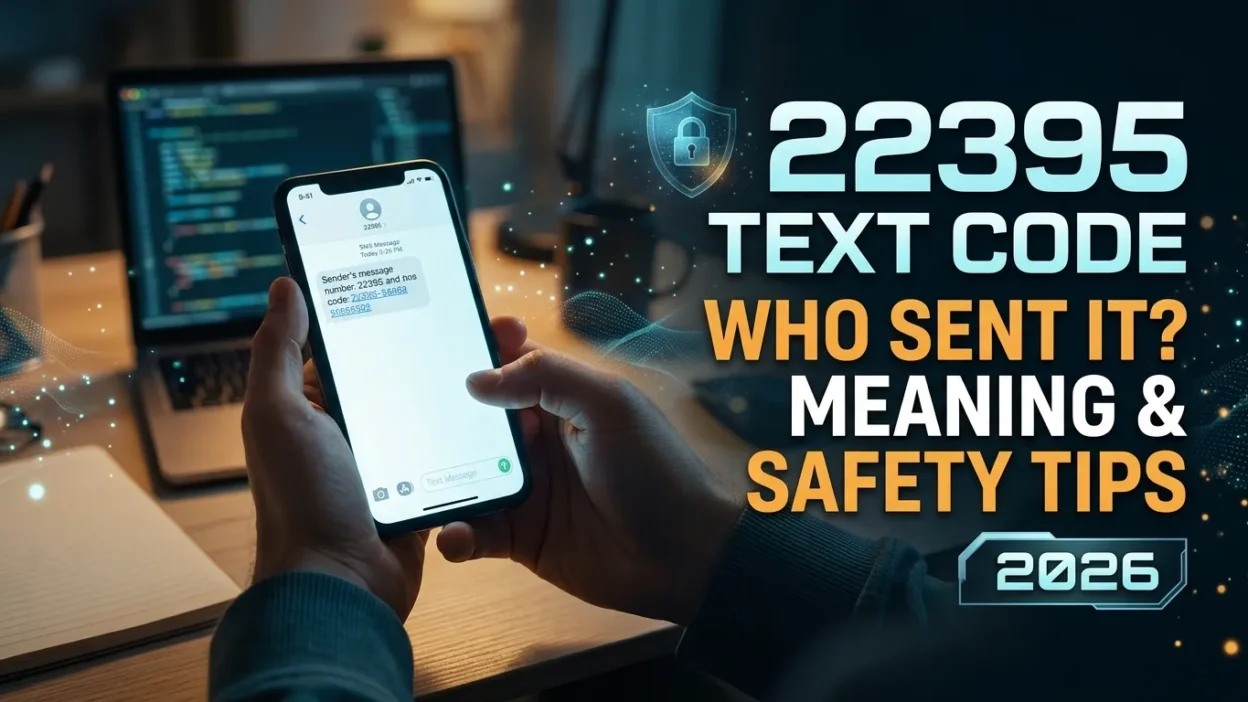
A text code 22395 is almost certainly a one-time verification passcode from a service you’re trying to access. That five-digit number isn’t a phone number in the traditional sense. It’s a shared short code leased by Twilio, a major communications platform and used by dozens of different companies to deliver two-factor authentication (2FA) codes and login verification messages .
The confusion comes from the word “shared.” Unlike a dedicated short code that belongs to one brand, 22395 carries verification traffic for multiple services at once. That’s why you might see a code from 22395 one day for your crypto exchange and another day for a credit union or a shopping app. The code itself is legitimate. The question worth asking is whether the message you received matches something you actually did.
Why 22395 Exists as a Shared Code
Short codes are five- or six-digit numbers that businesses use to send automated text messages at scale. They’re regulated by carriers and designed for one-way communication or simple command responses. A dedicated short code is expensive and takes months to provision. A shared short code lets smaller services or companies testing new verification flows piggyback on existing infrastructure.
Twilio’s shared short code 22395 falls into this category. It delivers authentication messages for services including Authy (Twilio’s own authenticator app), Shop Pay/Shopify, Gemini crypto exchange, Amplify Credit Union, CLEAR identity verification and others . The short code is just the delivery channel. The brand name should appear inside the message body, usually in a line like “Your Gemini verification code is: 483921” or “Your Authy code is: 184006” .
This shared model explains why the same number can send you codes for entirely unrelated accounts. It also explains why searching for “22395” turns up conflicting claims about who owns it. Multiple companies use it because they all route through Twilio.
What a Legitimate 22395 Message Looks Like
Real messages from this short code follow a predictable pattern. They contain a numeric code, a brief reference to the service that triggered it and sometimes an expiration notice. They do not contain links asking you to “verify your account” or “confirm your identity” through a website. They do not threaten account closure or demand immediate action. And they never ask you to reply with the code or share it with anyone.
Here’s what the flow should look like: You open an app or website. You enter your phone number. The service sends a code through 22395. You type that code into the same screen that requested it. Done.
If the message names a service you weren’t using at that moment, stop. Don’t enter the code anywhere. Don’t click anything. The code may be genuine, but the login attempt that triggered it wasn’t yours.
When 22395 Is a Security Warning, Not a Convenience
An unrequested verification code is one of the clearest signals that someone else is trying to access an account tied to your phone number. They may have your password from a data breach. They may be testing whether your number is active. Or they may have mistyped their own number and accidentally sent the code to you.
The code itself isn’t dangerous. Without it, the person attempting the login cannot proceed. The danger lies in what happens next. A common scam involves a follow-up call or message from someone claiming to be from the company, asking you to “read back the code to cancel the login attempt” or “verify your identity to secure your account.” That request is the scam. Legitimate companies never ask you to share a verification code over the phone or through text .
If you receive an unrequested code from 22395, the safest response is simple. Don’t use it. Don’t share it. Log into the account the message references through the official app or website, change your password if you’re concerned and enable additional security measures if available.
How to Tell a Real 22395 Text from an Impersonation
Scammers can spoof short codes, though it’s harder than spoofing a regular ten-digit number. The more common tactic is sending a message from a different number that mentions “22395” in the body text, hoping you’ll associate it with the legitimate code. The sender line matters. If the message didn’t actually come from 22395, it’s not from Twilio’s shared code, regardless of what the body says.
Beyond the sender number, look at the message structure. Genuine 22395 messages are short. They contain a code and a service name. They don’t contain urgent language, links to unfamiliar domains, or requests for personal information. If a message from 22395 includes a link to “verify your account” or warns that your account will be locked unless you act immediately, treat it as a phishing attempt regardless of the sender line .
What to Do If You Keep Getting Codes You Didn’t Request
Repeated unrequested codes suggest someone is repeatedly attempting to log into an account associated with your number. That’s worth taking seriously, but it’s not a reason to panic. The person attempting the login still needs the code, which only you receive.
Start by identifying which service is sending the codes. The message body usually names it. If the brand is unclear, reply HELP to 22395. The CTIA’s short code rules require senders to respond with the program name and contact information . That response should tell you which service is triggering the messages.
Once you know the service, log into that account directly through its official app or website. Change your password. Review recent login activity. If the service offers an authenticator app instead of SMS for 2FA, consider switching. SMS codes are convenient but vulnerable to SIM-swapping attacks and interception.
If the codes continue after you’ve secured the account, contact the service’s support team. They can investigate why the login attempts are happening and may be able to block them at the account level.
When 22395 Is Just Noise
Sometimes an unrequested code means nothing more than a typo. Someone entered your phone number instead of their own when trying to log in. They didn’t get the code. You did. The login attempt failed. Nothing else happens.
In that case, ignore the message. Don’t reply. Don’t click. Don’t change your password if you have no account with the service named in the text. The code will expire and the incident will pass.
The exception is when the service named in the message is one you do use. Even if you didn’t trigger the login, someone else might be trying to access your account. In that case, the cautious move is to log in, check for unfamiliar activity and update your credentials if anything looks off.
The Bigger Picture: Why Verification Codes Feel Like Spam
Services increasingly rely on SMS for 2FA because it’s simple and widely accessible. But the shared short code model creates confusion. A single number like 22395 can be legitimate for one person and suspicious for another depending on what they were doing when the message arrived.
The best defense is context. Did you just request a code? Then the message is expected. Did you not request anything? Then treat it as a signal to check your accounts. The code itself is never the problem. The problem is what someone might be trying to do with your account and the code is just the first clue.
Frequently Asked Questions
Is 22395 definitely a legitimate short code?
Yes, the number itself is a registered short code leased by Twilio and used for legitimate 2FA delivery . That doesn’t guarantee every message bearing the number is genuine, but the code’s infrastructure is real and regulated.
Which companies use 22395?
The short code is shared across multiple services including Authy, Shop Pay/Shopify, Gemini crypto exchange, Amplify Credit Union, CLEAR and others . The message body should name the specific service that triggered the code.
Why did I get a code from 22395 when I didn’t request one?
Someone may have entered your phone number by mistake, or someone may be attempting to access an account tied to your number. If you have an account with the service named in the message, log in and review activity. If you don’t, ignore the message.
Should I reply STOP to 22395?
You can, but STOP may not be the best first move for verification codes. If you opt out of the shared code, you might miss legitimate verification messages from services you actually use. Replying HELP is often more useful because it identifies the program that sent the message . If you want to stop the messages entirely, STOP will work, but understand the trade-off.
Can someone steal my account with just the code?
No. The code is useless without the password or login credentials for the account. The danger is when someone tricks you into sharing the code with them. Never read a verification code to anyone over the phone and never forward it to another number.
What should I do if I clicked a link in a 22395 message?
If the message came from 22395 and contained a link, it was almost certainly not a genuine verification message. Genuine 22395 texts contain codes, not links. If you clicked, you may have been directed to a phishing site designed to steal credentials. Change the password for the account referenced in the message immediately and monitor for suspicious activity.
Conclusion
A text code 22395 is a delivery mechanism, not a brand. It’s the shared short code Twilio uses to send verification passcodes for dozens of services. When you requested a code, it’s a routine security step. When you didn’t, it’s a prompt to check your accounts and make sure no one else is trying to access them. The code itself can’t hurt you. What you do with it matters. Keep it inside the app that requested it, never share it and treat unrequested codes as a nudge to review your security. That’s the whole playbook. 🔐

Mr. Abdullah is a passionate writer who creates engaging, helpful, and easy-to-understand content for readers. He enjoys sharing fresh ideas, useful insights, and inspiring stories through MessageWritingHub.